

Hyperbaric Oxygen Therapy and Fertility

What is Infertility?
Trying for a baby can be a very different experience for different people. Some people conceive quickly, while for others it can take longer or they may need additional support.
Infertility is commonly defined as not becoming pregnant after a year of regular unprotected sex. There are many possible reasons, involving either partner or sometimes both, and in some cases, no clear cause is found.
Depending on the circumstances, fertility care may include lifestyle changes, medication, surgery or assisted conception such as intrauterine insemination (IUI) or in vitro fertilisation (IVF).
If you have concerns about trying to conceive or your fertility, it is important to speak to your GP or fertility specialist. OxyGeneration does not investigate or diagnose fertility problems.

What is Hyperbaric Oxygen Therapy?

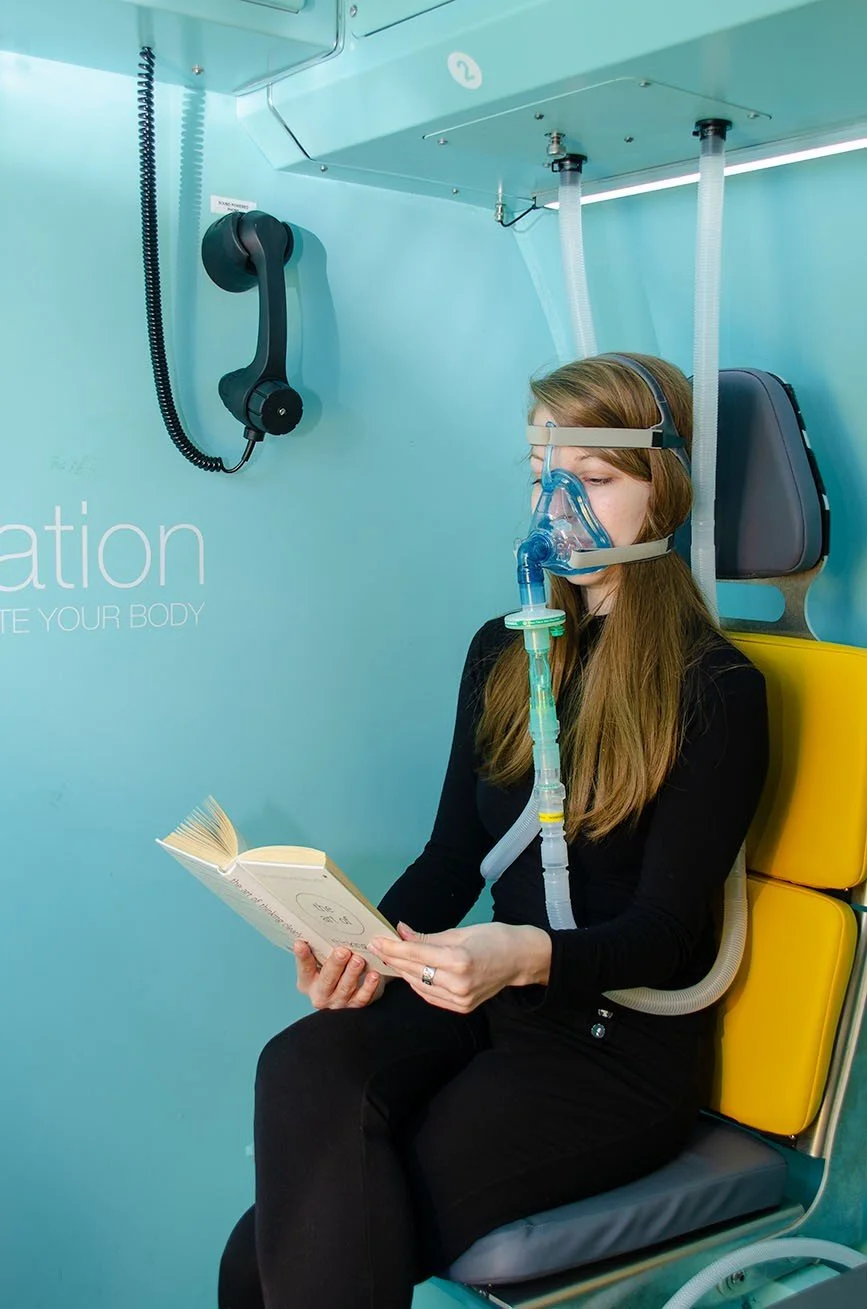
Hyperbaric oxygen therapy (HBOT) involves breathing high-concentration oxygen through a mask in a pressurised chamber.
This allows more oxygen to dissolve into the bloodstream and reach tissues with reduced blood supply.
Oxygen plays a key role in many normal processes within the body, including healing and recovery. By increasing oxygen availability, HBOT can support tissue repair, collagen production, new blood vessel formation, and the body’s immune responses that help manage infection.
By reducing substances in the body that drive inflammation (inflammatory cytokines), HBOT may also help to ease swelling and discomfort.
HBOT is always used in addition to standard medical treatment, not as a replacement.

Why HBOT Is Being Researched for Fertility
Researchers have explored whether HBOT could have a role alongside fertility care for both women and men.
In women, studies have looked at whether HBOT might influence blood flow and the development of the lining of the womb (endometrium). More recently, researchers have also investigated HBOT in women who produce a low number of eggs when undergoing treatment to stimulate the ovaries in a fertility treatment cycle.
For male infertility, research has explored possible effects on sperm count, sperm movement, and overall quality.
Some studies have reported encouraging results, but results remain limited. We do not yet know whether HBOT improves the overall chance of having a baby.
If you are undergoing IVF, IUI or another fertility treatment, you should discuss any additional therapies you are considering with your fertility team.

Research on HBOT and Fertility
Research into HBOT and fertility continues to develop, and studies are investigating several different aspects of reproductive health.
The Lining of the Womb
Researchers found an increase in the thickness of the womb lining after HBOT, and some encouraging implantation and pregnancy findings. However, this was a small study, and the results now need to be confirmed by further research.
Response by the Ovaries
A small study showed improvements in the number of eggs retrieved during fertility treatment. Larger trials are now needed to determine whether HBOT might be responsible for these differences, and if it could make a meaningful difference to pregnancy or live birth rates.
Male Fertility
A review of nine trials reported improvements in sperm quality, sperm count, movement and development of the sperm, as well as pregnancy rates. However, the review concluded that further independent research was needed to establish whether these findings might lead to improvements in fertility outcomes.
Overall, these studies give researchers reasons to continue investigating HBOT and fertility, but there is still a great deal we don’t know. HBOT should not be viewed as an alternative to fertility assessment or established fertility treatment, and there is currently not enough evidence to say that it increases an individual’s likelihood of having a baby..
OxyGeneration provides HBOT in a calm clinical environment, delivered by a trained and experienced team.
Some clients are referred by a healthcare professional, but self-referral is also welcomed. All clients complete a screening questionnaire to check suitability. In some situations, we may ask clients to confirm suitability with their GP or fertility specialist before proceeding.
If you are undergoing fertility treatment, we encourage you to discuss HBOT with your fertility team before starting sessions. This is particularly important so that any additional treatment can be considered alongside the timing and requirements of your existing care.
OxyGeneration does not provide emergency medical treatment. We do not diagnose or manage medical conditions, and HBOT is not a replacement for standard medical care. Clients remain under the supervision of their GP or consultant for the management of their condition. As with all treatments, outcomes can vary from person to person.
If you would like to find out more about HBOT and whether it might be appropriate for you, please contact our team for more information.
What to Expect at OxyGeneration


Important Information
Hyperbaric oxygen therapy is not suitable for everyone.
Please visit our Suitability page for further information.
Testimonial
“I noticed that I have a lot more energy. Usually my sleep was very broken and I might get 3 or 4 hours a night for the last 10 years. Since I started my sessions here I think I’m getting a solid 8 hours sleep every night. I’m so happy that I’m getting a good sleep at last.”
— Anon, attending with fibromyalgia

Do You Have Any Questions?
For more information or support, please contact OxyGeneration at 091 394444.

Appointment Information
Pricing
Discover our individual and bundle prices for OxyGeneration sessions.
Book a Session
Ready to book your sessions with us?
FAQ
Read our most frequently asked questions here.